Build a small study schedule around actual available time and specific tasks. This worked guide uses a small reproducible example so you can check the result before adapting it to your own task.
始める前に
- A weekly calendar
- A list of subjects or assignments
- Known deadlines
ステップごとの手順
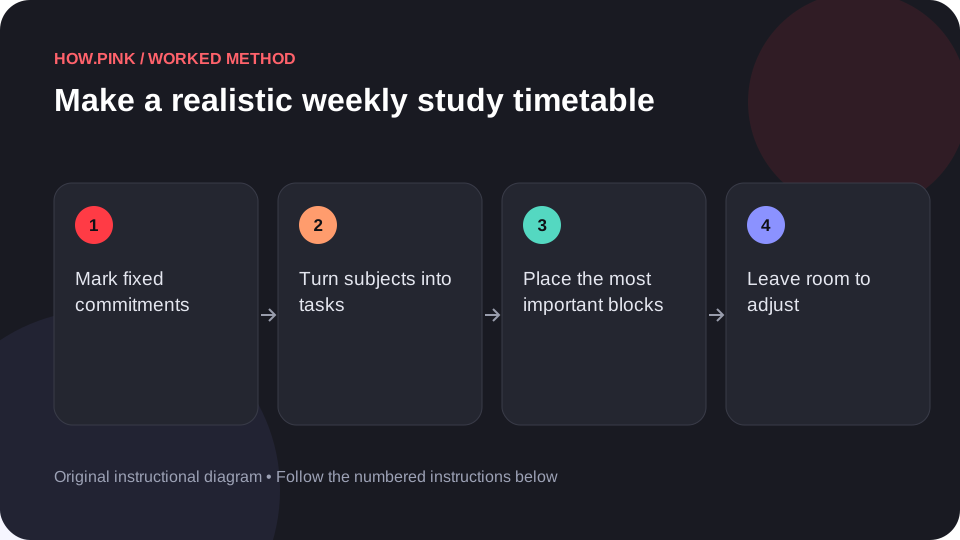
Mark fixed commitments
Add classes, work and other fixed commitments first. Look at the remaining space instead of assuming every evening is free.

Turn subjects into tasks
Replace a broad entry such as study history with a concrete task such as answer five questions from chapter two. Estimate a small block for each task.
Place the most important blocks
Schedule the tasks with the closest real deadlines first. Keep enough time for setup and a short check at the end.
Leave room to adjust
Keep some unscheduled space so a delayed task does not force every other task to move. Avoid filling all free time with study blocks.
Review after one week
Compare planned blocks with completed work. Shorten, move or divide blocks that were unrealistic and use the actual experience to build the next week.
ヒントとトラブル対処
- A specific task is easier to begin than a subject label.
- Adjust the schedule to your own energy and commitments.
よくある質問
How should I adapt this guide to my situation?
Begin with the small example, use the instructions for your actual materials or equipment, and change one thing at a time so the result can be checked.
What should I check before finishing?
Compare planned blocks with completed work. Shorten, move or divide blocks that were unrealistic and use the actual experience to build the next week.